

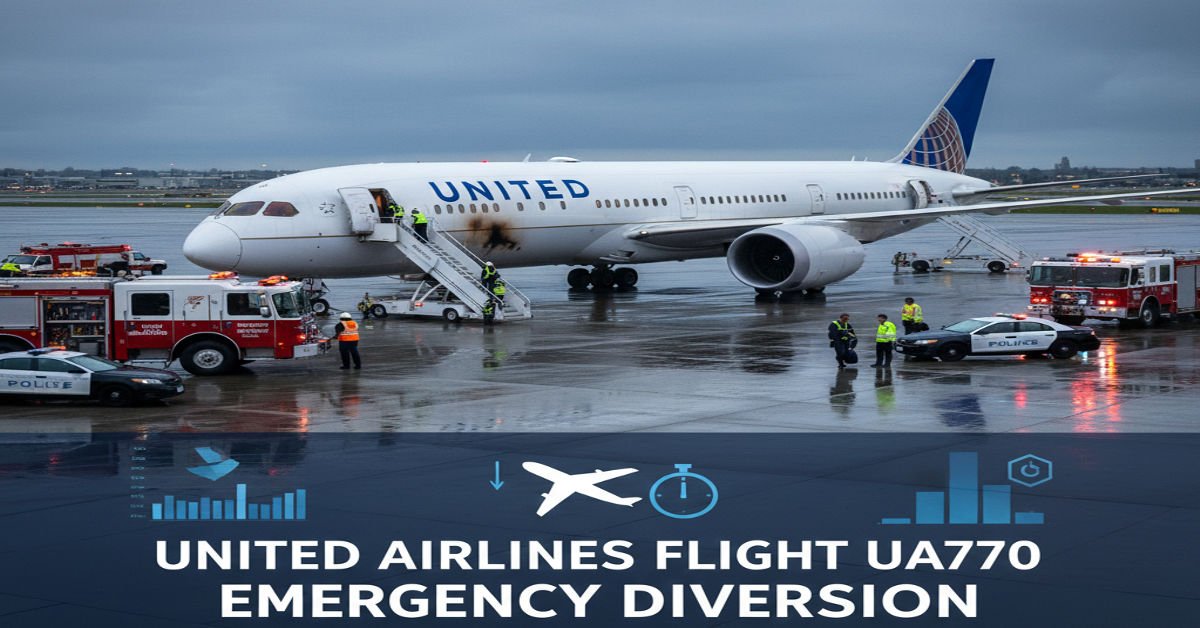
Air travel is one of the safest modes of transportation, yet unexpected situations can occur mid-flight. One such notable incident was the united airlines flight ua770 emergency diversion, which drew attention from travelers and aviation enthusiasts alike. Understanding the details of this event provides insight into aviation safety, emergency protocols, and the professionalism of flight crews. In this article, we will explore the incident comprehensively, covering the flight details, the diversion, passenger safety, and the broader implications for commercial aviation.
Flight Overview: Route and Aircraft
United Airlines Flight UA770 is a long-haul transatlantic flight that typically operates from Barcelona-El Prat Airport in Spain to Chicago O’Hare International Airport in the United States. The route is approximately nine hours in duration under normal circumstances, covering a distance of over 4,600 miles. The aircraft involved in this flight is a Boeing 787-9 Dreamliner, known for its advanced fuel efficiency, quiet operation, and modern safety features.
On the day of the incident, UA770 departed Barcelona on schedule, carrying hundreds of passengers and a full crew. As the aircraft reached European airspace, it became clear that a situation required immediate attention. The flight crew followed standard safety protocols, assessing the issue and coordinating with air traffic control for an emergency diversion. Such procedures are designed to ensure the safety of all passengers while minimizing potential risks associated with in-flight anomalies.
The Emergency Diversion: What Led to the Decision
The united airlines flight ua770 emergency diversion was initiated after the flight crew detected a technical anomaly that could not be ignored. While the exact details of the system malfunction have not been publicly confirmed, aviation experts suggest that it likely involved critical aircraft systems such as engine monitoring, pressurization, or fuel management. In any such situation, the decision to divert is always precautionary, prioritizing safety over adherence to the scheduled route.
Upon identifying the anomaly, the pilots declared an in-flight emergency using the standard transponder code 7700, which signals a general emergency to air traffic control and alerts all nearby aircraft. This procedure allows the crew to receive immediate guidance and priority clearance for landing at the nearest suitable airport. In the case of UA770, London Heathrow Airport was selected as the diversion point, given its proximity, advanced emergency response capabilities, and experience handling large international flights.
Flight Crew Response and Safety Measures
Aviation safety relies heavily on the professionalism and training of the flight crew. During the united airlines flight ua770 emergency diversion, the pilots demonstrated calm, efficient, and methodical decision-making. They followed established procedures for emergency handling, including notifying air traffic control, instructing cabin crew, and communicating with passengers about the situation.
The cabin crew played a critical role in maintaining passenger calm, providing clear instructions, and ensuring that safety protocols such as seatbelt checks and emergency preparedness measures were followed. Passengers were reassured that the diversion was a precautionary measure and that all necessary safety procedures were in place. The coordinated efforts of both flight deck and cabin crew contributed to a successful and safe landing at Heathrow.
The Diversion Airport: Why London Heathrow?
London Heathrow Airport (LHR) was chosen for the emergency diversion of UA770 because of its strategic location and comprehensive facilities. As one of the world’s busiest and most well-equipped airports, Heathrow has the capacity to handle large aircraft under emergency conditions. The airport is staffed with specialized emergency response teams, including fire services, medical personnel, and ground operations capable of responding to a range of in-flight anomalies.
Selecting Heathrow ensured that the aircraft could land safely with minimal risk to passengers and crew. The airport’s long runways, advanced navigation aids, and trained personnel made it the ideal choice for a diversion, even though it required adjusting flight plans and coordinating with European airspace authorities.
Passenger Experience During the Diversion
For passengers, an emergency diversion can be a stressful experience, but proper communication and safety measures can significantly reduce anxiety. During the united airlines flight ua770 emergency diversion, passengers were kept informed by both flight deck announcements and cabin crew updates. They were instructed to remain seated with seatbelts fastened and to follow all safety instructions diligently.
While diversions inevitably lead to delays, passengers of UA770 reported that the crew handled the situation with professionalism and empathy. United Airlines also provided assistance post-landing, including rebooking options, meal vouchers, and customer support to help travelers continue their journey with minimal inconvenience. This approach highlights the airline’s commitment to passenger care during unplanned events.
Technical Aspects of the Emergency Diversion
An emergency diversion like that of UA770 typically involves a combination of technical evaluation, real-time decision-making, and coordination with air traffic authorities. Pilots monitor a wide range of aircraft systems, including engines, hydraulics, electrical systems, and pressurization. Any abnormal readings or malfunctions prompt immediate action to assess the severity and potential risks.
For UA770, the flight crew’s timely recognition of the anomaly and prompt communication with air traffic control prevented escalation. By diverting to Heathrow, the crew ensured that the aircraft could be safely inspected, minimizing the risk of further complications. This incident underscores the importance of redundant systems in modern aircraft, as well as the critical role of pilot training in emergency scenarios.
Broader Implications for Aviation Safety
The united airlines flight ua770 emergency diversion serves as a reminder of the aviation industry’s rigorous safety standards. Modern commercial aircraft are equipped with multiple backup systems to handle emergencies, and crews undergo extensive training to manage in-flight anomalies. Diversions are part of standard operating procedures, reflecting a culture of safety that prioritizes lives over schedules.
Incidents like this also provide valuable data for airlines and regulatory authorities. Post-incident analysis helps identify potential areas for improvement, whether in aircraft systems, crew training, or emergency protocols. Each emergency diversion contributes to the broader goal of enhancing safety across the aviation sector.
Media Coverage and Public Reaction
News of the united airlines flight ua770 emergency diversion was widely reported by aviation and travel media. Passengers and observers highlighted the professionalism of the crew and the smooth handling of the situation. While some travelers expressed concern over the disruption, the overall response emphasized the safety-first approach that airlines follow in emergencies.
Public reaction also reinforces the importance of transparency and clear communication. United Airlines’ timely updates, passenger support, and reassurance helped maintain confidence in the airline’s commitment to safety. These factors are crucial in managing public perception and trust during unplanned events.
Lessons for Travelers
The incident of UA770 offers several lessons for passengers:
- Always pay attention to safety briefings and instructions from the crew.
- Stay calm during unexpected events; trained professionals are in control.
- Understand that diversions, while inconvenient, are precautionary and prioritize safety.
- Plan for potential delays when flying internationally, as emergency situations can alter schedules.
- Rely on airline support for rebooking, meals, and accommodations during unplanned disruptions.
By following these practices, travelers can navigate unexpected in-flight situations with confidence and preparedness.
The Role of Technology in Emergency Diversions
Advancements in aviation technology have made incidents like the united airlines flight ua770 emergency diversion manageable and safe. Modern aircraft are equipped with sophisticated sensors, real-time monitoring systems, and automated alerts that help pilots detect potential issues early. Communication systems allow seamless coordination with air traffic control and ground emergency teams.
These technologies, combined with rigorous training, ensure that even critical situations can be handled efficiently. Emergency diversions are not a sign of failure but rather a demonstration of the robustness of modern aviation systems and the professionalism of crews worldwide.
Conclusion
The united airlines flight ua770 emergency diversion highlights the importance of safety, preparedness, and professionalism in aviation. From the moment the anomaly was detected to the safe landing at London Heathrow, the flight crew and airline demonstrated exemplary adherence to emergency protocols. Passengers remained safe, informed, and supported throughout the event, underscoring the airline’s commitment to their well-being.
While diversions may cause inconvenience, they are essential tools that prioritize lives over schedules. The UA770 incident serves as both a reassurance of the safety of modern air travel and a reminder of the critical role played by skilled flight crews and advanced technology.
By understanding these events, travelers gain insight into how airlines manage emergencies and the measures in place to ensure safety at every stage of flight.
Frequently Asked Questions (FAQs)
1. Why did United Airlines Flight UA770 divert mid-air?
The flight diverted due to a technical anomaly detected during the flight, and the decision was precautionary to ensure passenger safety.
2. Was anyone injured during the emergency diversion?
No, all passengers and crew landed safely without any reported injuries.
3. Which airport handled the emergency landing?
The flight was diverted to London Heathrow Airport, chosen for its emergency facilities and capacity to handle large aircraft.
4. How do flight crews decide on emergency diversions?
Crew members assess aircraft systems, communicate with air traffic control, and prioritize safety when determining the nearest suitable airport.
5. Does an emergency diversion indicate a dangerous flight?
Not necessarily. Diversions are precautionary measures, and modern aircraft are designed to handle emergencies safely.