

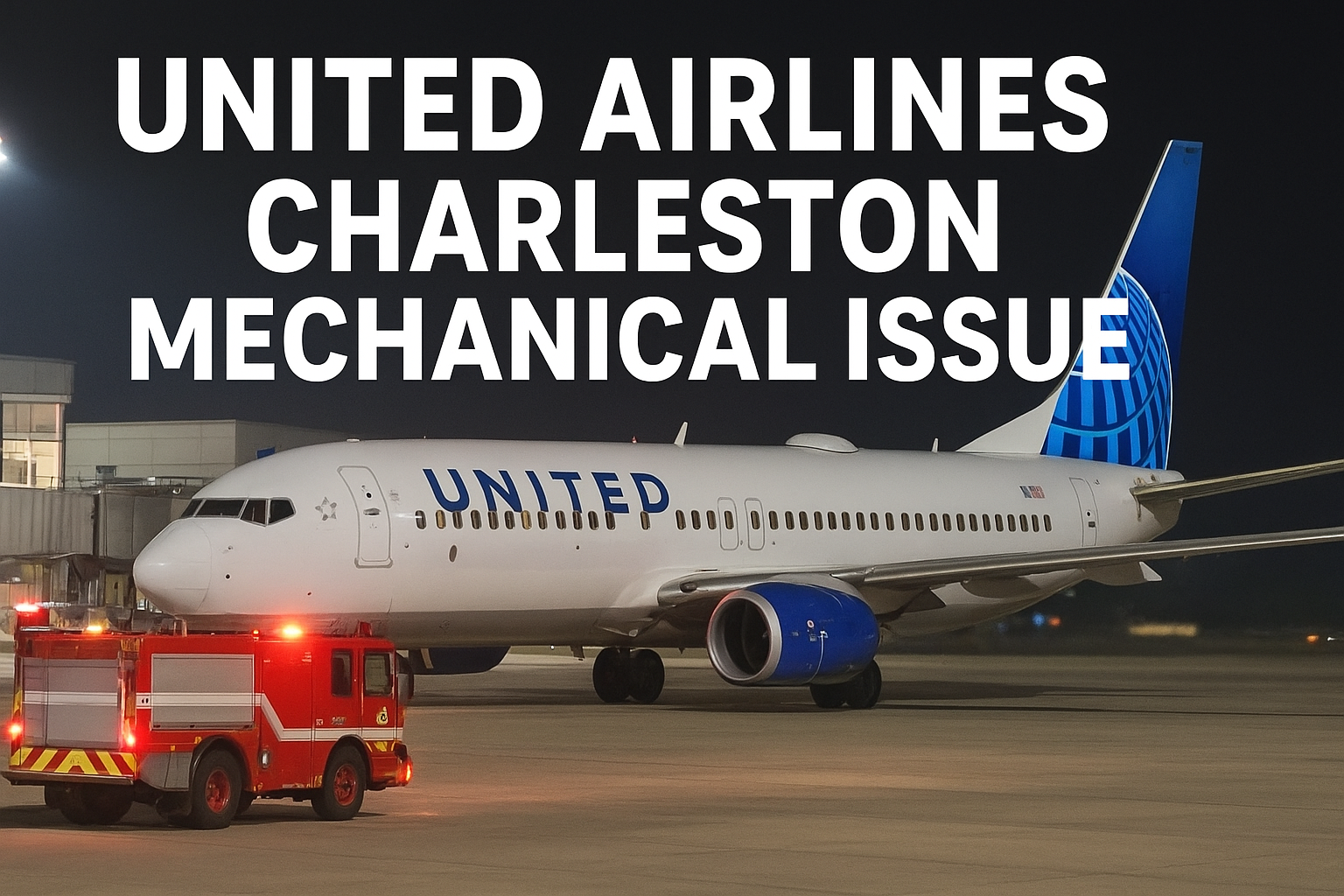
In June 2025, passengers arriving at Charleston International Airport experienced an unexpected disruption when a flight faced a mechanical concern upon landing. The united airlines charleston mechanical issue not only delayed travel but also raised awareness about how airlines, airports, and passengers respond to such events. This article explains what happened, what authorities reported, and what travelers should know in similar situations.
Understanding the Incident
On the night of June 18–19, 2025, a United Airlines flight encountered a mechanical alert as it landed in Charleston. Emergency responders and airport crews treated the situation with caution, and passengers were guided off the aircraft as a precautionary measure. The united airlines charleston mechanical issue did not result in serious injuries, but it drew a visible emergency response, with fire and rescue units positioned near the aircraft.
Passenger Accounts and On-the-Ground Reports
Passengers described the event as stressful but organized. Some travelers recalled hearing an announcement about an engine warning, while others reported seeing emergency slides deployed to speed up deplaning. Social media posts and community discussions reflected a mix of fear and relief. Many passengers stated that while the delay was inconvenient, they appreciated the professionalism of the crew and emergency responders. The united airlines charleston mechanical issue left a lasting impression on those aboard, reminding travelers of the importance of safety-first procedures.
Technical Aspects of the Mechanical Issue
Early coverage from aviation sources suggested that the aircraft involved may have been a United Express regional jet, possibly an Embraer E175. Reports pointed toward an engine-related warning as the trigger for the emergency protocols. However, the exact root cause of the united airlines charleston mechanical issue remains subject to official inspections and investigations. Aviation experts stress that initial alerts do not always indicate a catastrophic failure; sometimes, sensor malfunctions or precautionary systems trigger warnings.
Airline and Airport Response
Airline crews are trained extensively to manage unexpected scenarios, and this case proved it. After the warning, the captain halted the aircraft and coordinated with ground operations. Charleston International Airport deployed emergency teams, while United Airlines staff ensured passengers were escorted safely to the terminal. The united airlines charleston mechanical issue highlighted the importance of well-rehearsed emergency procedures, demonstrating that safety protocols can be carried out effectively under pressure.
The Role of Investigations
Whenever a mechanical issue arises, investigators review several key areas:
- Flight data and cockpit voice recordings
- Maintenance history of the aircraft
- Crew decision-making process
- Inspection of the affected systems
The united airlines charleston mechanical issue will likely undergo similar checks, and any confirmed findings may later appear in FAA or NTSB reports. While full conclusions take time, the process ensures accountability and helps prevent future problems.
What Passengers Can Learn
Travelers often wonder what to do when unexpected issues occur. The united airlines charleston mechanical issue offers several lessons:
- Follow crew instructions immediately. Crews are trained to protect passenger safety in every possible scenario.
- Stay calm during deplaning or evacuation. Moving carefully helps ensure safety for all passengers.
- Keep documents handy. Having your boarding pass and ID ready helps with rebooking or refunds.
- Ask for assistance. If delayed overnight, airlines may provide lodging, meal vouchers, or alternative flights.
By understanding these steps, passengers can respond with confidence if faced with similar events.
Why Communication Is Key
When unexpected incidents happen, passengers value clear and quick communication. In the case of the united airlines charleston mechanical issue, many travelers noted that announcements from the crew and visible readiness from airport staff helped reduce panic. Transparent updates not only reassure those directly involved but also help maintain public trust in air travel.
Broader Impact on Air Travel
Mechanical alerts are rare, but they serve as reminders of the safeguards built into aviation. The united airlines charleston mechanical issue shows how airline safety systems, airport emergency response teams, and trained crews come together to prioritize passenger well-being. For travelers, the takeaway is clear: while such events may cause delays or inconvenience, safety remains the top priority.
Frequently Asked Questions
Q1: Were there any injuries reported?
No serious injuries were reported. Passengers were safely moved from the aircraft to the terminal.
Q2: What caused the united airlines charleston mechanical issue?
Early reports suggested an engine-related warning, but the official cause is still under investigation.
Q3: Will United Airlines cancel more flights due to this?
Not necessarily. The affected aircraft may undergo maintenance, but other flights continue as scheduled.
Q4: How do passengers get updates in such cases?
Travelers should check official airline notifications, airport announcements, and flight-tracking apps for updates.
Q5: Is it safe to fly through Charleston after this event?
Yes. Charleston International Airport remains fully operational, and mechanical issues are handled under strict safety protocols.
Conclusion
The united airlines charleston mechanical issue reminds travelers that while mechanical alerts can cause concern, modern aviation is built on systems that prioritize safety above all else. Quick action by flight crews, airport responders, and emergency services ensured that passengers were safe and cared for during the disruption. For future travelers, understanding procedures and trusting the process can help ease anxiety when unexpected events occur.