

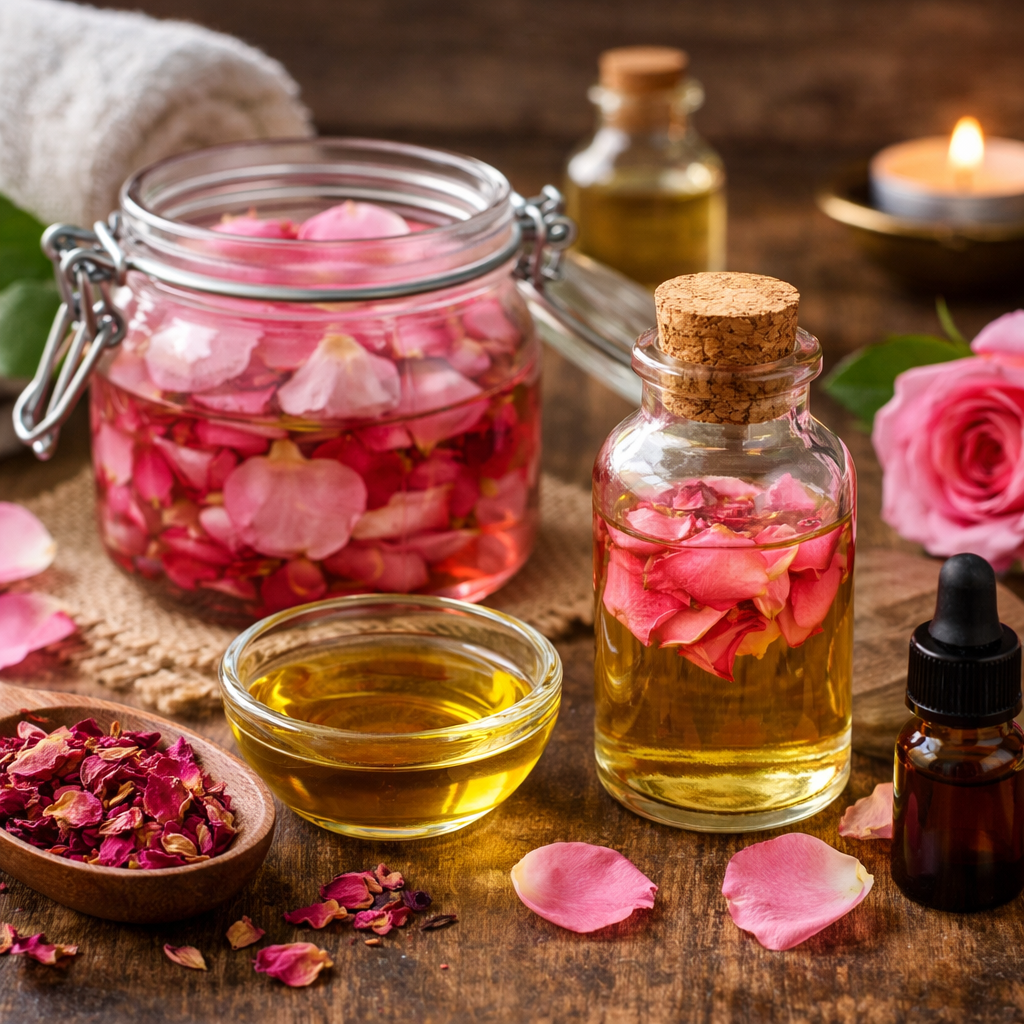
Rose oil has long been treasured for its soft floral aroma, skin-loving properties, and calming effect on the senses. Across cultures, it has been used in beauty rituals, herbal traditions, and everyday self-care. Many people believe rose oil is difficult to prepare, but once you understand the process, learning how to make rose oil from rose petals becomes an enjoyable and deeply satisfying experience. This guide is written in a natural, human tone and explains the entire process in detail, using time-tested methods that anyone can follow at home.
This article focuses on infused rose oil, which is the most practical and widely used form for home preparation. It does not rely on chemicals, artificial fragrance, or complicated equipment. Instead, it emphasizes patience, quality ingredients, and simple techniques that produce a gentle yet effective oil.
Understanding What Rose Oil Really Is
Before starting, it is important to understand what people usually mean when they talk about rose oil. In most home recipes, rose oil refers to an infusion made by soaking rose petals in a carrier oil. This process allows the natural compounds, aroma, and beneficial properties of the petals to slowly transfer into the oil.
This is different from rose essential oil, which is created through steam distillation and requires an extremely large quantity of petals. Essential oil production is complex and not suitable for home preparation. When learning how to make rose oil from rose petals at home, the infused oil method is the safest, most realistic, and most beneficial option for everyday use.
Why Make Rose Oil at Home
Homemade rose oil offers several advantages. First, you have full control over the ingredients, ensuring purity and freshness. Second, it allows you to avoid synthetic fragrances often found in commercial products. Third, the process itself is relaxing and connects you with traditional practices that have been passed down for generations.
Making your own oil also ensures that it suits your specific needs. Whether you want something light for facial care or richer for body massage, you can select the carrier oil that best fits your lifestyle. Understanding how to make rose oil from rose petals gives you a versatile natural product that can be used in many ways.
Selecting the Best Rose Petals
The success of your rose oil depends heavily on the quality of the rose petals you use. Fragrance is the most important factor. Roses with a strong, natural scent will produce a more aromatic oil than roses bred only for appearance.
Fresh garden roses are ideal if they are grown without pesticides or chemical treatments. Damask roses and cabbage roses are especially valued for their fragrance, but any deeply scented rose can work well. Harvest roses early in the morning when their natural oils are most concentrated.
After harvesting, gently separate the petals from the base. Rinse them lightly to remove dust or insects, then allow them to dry completely. Moisture is the biggest enemy when learning how to make rose oil from rose petals, as it can lead to spoilage.
Fresh Petals Versus Dried Petals
Both fresh and dried rose petals can be used, and the choice depends on personal preference. Fresh petals provide a softer, more natural scent but require careful drying before infusion. Even a small amount of trapped moisture can cause mold.
Dried petals reduce the risk of spoilage and tend to last longer in storage. They may produce a slightly lighter fragrance, but they are often easier for beginners to work with. Many experienced herbalists partially dry fresh petals for a day or two before infusing them, striking a balance between scent strength and safety.
Choosing the Right Carrier Oil
The carrier oil serves as the base that absorbs the rose essence. Its quality and characteristics influence the final product. Olive oil is traditional and widely available, offering stability and nourishment. Sweet almond oil is lighter and absorbs easily, making it popular for skincare. Jojoba oil has a long shelf life and closely mimics natural skin oils.
When selecting a carrier oil, choose one that is fresh, pure, and mild in scent. Strongly scented oils can overpower the delicate aroma of roses. The right carrier oil enhances the process of how to make rose oil from rose petals while preserving the natural fragrance.
The Traditional Cold Infusion Method
The cold infusion method is the most traditional and widely recommended approach. It is gentle, requires no heat, and preserves the delicate compounds found in rose petals.
Begin by placing the prepared rose petals into a clean, dry glass jar. Do not compress them too tightly; allow enough space for the oil to circulate. Pour the carrier oil over the petals until they are fully submerged. Seal the jar tightly and place it in a warm location with indirect sunlight.
Over the next four to six weeks, gently shake the jar every few days. This helps release the rose properties into the oil evenly. As time passes, the oil will gradually develop a soft floral aroma and a subtle color change. Patience is key in how to make rose oil from rose petals using this method.
Once the infusion period is complete, strain the oil through a fine cloth or sieve. Discard the petals and store the finished oil in a dark glass bottle away from heat and light.
The Gentle Heat Infusion Method
For those who prefer quicker results, the heat infusion method is an effective alternative. This method shortens the infusion time but requires careful temperature control.
Place rose petals and carrier oil in a heat-safe container. Set it over a pot of gently simmering water, creating a double-boiler effect. Keep the heat very low and allow the oil to warm slowly for several hours. The oil should never boil, as excessive heat damages the rose compounds.
After heating, let the oil cool completely before straining. While this method is faster, attention and care are essential. When done correctly, it produces a pleasant and usable oil and offers another approach to how to make rose oil from rose petals.
Strengthening the Aroma Naturally
Homemade rose oil has a subtle fragrance, but it can be naturally intensified. One traditional technique involves repeating the infusion process multiple times. After straining the first batch, add fresh rose petals to the same oil and infuse again.
Repeating this process two or three times builds a deeper aroma without artificial additives. This layering method has been used for centuries and is especially useful if you want a richer scent for massage or personal care.
Proper Storage and Shelf Life
Storing rose oil correctly helps maintain its quality and extends its shelf life. Always use dark glass bottles to protect the oil from light. Keep the bottle in a cool, dry place away from direct sunlight or heat sources.
Shelf life depends on the carrier oil used. Most homemade rose oils last between six months and one year. Refrigeration can extend freshness, particularly in warm climates. If the oil develops an unpleasant smell or cloudy appearance, it should be discarded.
Understanding storage is an essential part of how to make rose oil from rose petals safely and successfully.
Uses of Homemade Rose Oil
Rose oil is valued for its versatility. It can be used as a facial oil, body moisturizer, or massage oil. Many people apply it to dry hair ends or use it as a scalp treatment. Its gentle aroma makes it ideal for relaxation rituals and evening routines.
Because infused rose oil is mild, it is generally suitable for most skin types. However, a patch test is always recommended before regular use. Learning how to make rose oil from rose petals allows you to create a multipurpose product tailored to your needs.
Benefits for Skin and Hair
Rose oil helps support skin hydration and softness. It is often used to calm dry or irritated skin and improve overall texture. When applied regularly, it can leave the skin feeling smooth and refreshed.
For hair, rose oil adds shine and helps manage dryness. It is commonly used as a leave-in treatment or scalp massage oil. These benefits explain why so many people are interested in how to make rose oil from rose petals using natural methods.
Common Mistakes to Avoid
One of the most common mistakes is using wet petals, which can cause mold. Another mistake is overheating the oil, reducing its quality and fragrance. Using roses without fragrance often leads to disappointing results.
Rushing the process is another issue. Rose oil requires time to develop properly. By avoiding these mistakes, you improve both the scent and shelf life of your oil.
Cultural and Traditional Significance
Rose oil has deep roots in traditional practices across many cultures. It has been used in herbal remedies, beauty rituals, and ceremonial preparations. Understanding how to make rose oil from rose petals connects you to this long history and preserves a valuable natural tradition.
Conclusion
Learning how to make rose oil from rose petals is a rewarding process that combines patience, simplicity, and respect for nature. With quality roses, a suitable carrier oil, and careful preparation, you can create a gentle and versatile product for everyday use. Homemade rose oil may not be highly concentrated, but its beauty lies in its purity and the care invested in making it. By following traditional methods, you gain a timeless skill that enhances both self-care and natural living.
FAQs
What type of rose is best for making rose oil?
Fragrant, pesticide-free roses are best, especially garden roses with a strong natural scent.
How long does it take to make rose oil?
Cold infusion usually takes four to six weeks, while gentle heat methods can take a few hours.
Is homemade rose oil the same as essential oil?
No, homemade rose oil is an infusion and is much gentler than distilled rose essential oil.
Can rose oil be used daily?
Yes, it is mild and suitable for daily use on skin and hair after a patch test.
Can I repeat the process to strengthen the scent?
Yes, reinfusing the oil with fresh petals naturally deepens the fragrance.